Showing posts with label The Most Interesting People I know. Show all posts

Monday, February 15, 2021

Those Little White Pills

 February 15th 2021

Yesterday, five of us took a walk to the top of a hill in the memory of a fellow-walker.  Doc was a thinker, part-philosopher part-iconoclast, consummate team mate. 
Above all, we walked together.  
Over the last twenty years, when we walked the hills – the ancient rock formations around Bangalore, above the stratus clouds in Coorg and across the narrow Pass of the Gaddis at Hampta in Himachal - he was a quiet, reflective, inspiring companion, his lithe frame skipping over the rocks, his breathing even, the eyes curious to explore.  When we shivered and cursed the biting, unrelenting freeze, he would swap short notes with our trek guide on local medicines – the cold was in the mind and if you convinced yourself that it wasn’t there, well, it wasn’t.
 
Every plant had a story to tell him, for wasn’t his homeopathy based on the science of the botanical? His was a life inspired by these plants, a life that was happy to seek answers to quotidian questions of pagan mystique, an uncomplicated, disciplined life of meditation, with gentle humour and an inner smile.  If he felt unwell, we would never know of it, for much of that conversation was with himself.  If he felt angry, he too would never know of it, for it was an alien emotion.  When the walk was done and we were back in our homes, he’d disappear till the next walk happened.  Attachment was like anger, an alien emotion.
He was built to be a walker.
 
On one walk, he reflected that he was becoming aware of his own mortality, which despite having had the occasional deeper conversation surprised me.  That is what walking does to you sometimes, and that reflection – when you see a giant of a hill by your side, the result of four billion years of utterly miraculous evolution – is evocative, humbling, meditative.  
Doc was a meditative walker.  The journey mattered.  Time did not.

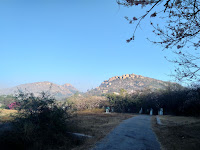
We laboured up the beautiful Kaiwara Hill last morning – a
drying forest of waiting tinder - and exchanged our Doc stories and the odd one he had left behind in that noiseless, unassuming way of his.  We laughed about his little white pills, thinking of the times when he had defended his science with a knowing smile and allowed us our earthly mirth.  Had he been on the walk, that smile would have been teased us back in turn.  


We trundled our way up, with even DV – whose legs had last been pushed to perform three years ago – making the grunt to the top, and laughed and joked for much of the time, for Doc would have wanted it that way. 
 
“Don’t pay attention to me,” he would have said, in that dismissive way of his, “just move on.”
Doc was a walker, you see.
 

And as we dropped our bags at the top of the hill, and took the odd photo – sunlight reflecting off grey hair, stomachs in, shoulders up – he must have been smiling down on us behind that neatly trimmed beard in that bright way of his.  For nothing better could be expected from this motley bunch of stragglers, all of whom would remember him as The One Who Walked Alongside In Meditation.


The panorama from Kaiwara betta
Circa: February 14th, 2021

Thursday, December 17, 2015

Gulven

We crossed the jeep on our way to the Brahmaputra and I saw the foreigner I had seen earlier in the day, now seated in the back seat.  He recognised me and we exchanged a smile and a wave.  With his floppy hat and white beard, he looked much like the many others who travel around India looking for the wildlife experience.

When we reached Nameri two days later, there he was again, at the lunch table of the Eco Camp.  As we settled down to a meal at the next table, he introduced himself, his slow, careful English marked by a distinctly French accent, and asked politely, though hesitantly, if he could join our fun-loving group.  It wasn’t particularly unusual and he seemed a decent sort, so we invited him.
 
Gulven, his name was.  An unusual name, I thought, and have remembered it since.
He was quite an odd chap: in his mid-sixties, of medium height but heavily built, with lidded eyes and a puffed pinkish face behind his poorly trimmed beard, his clothes rather shabby and unwashed (he wore the T-shirt I had seen on him two days ago), the stubby fingers – equally unwashed - tearing the roti and dipping it in dal and veggies.  I instantly recollected a word from the Enid Blyton days – ragamuffin!

He chewed his meal deliberately, much as one would consume an unloved but necessary vegetable, and was entirely unfussy in his choice of food though it was, he said, his first trip to India.  He had flown in from Paris to Dubai to Bangalore and then to Guwahati – all without an overnight break.  Immediately after landing at Guwahati, he had taken a bus to Kaziranga for a couple of days and the previous day had taken a handful of local buses, hitched rides and walked the last few kilometres to reach the Nameri Eco Camp.  If this was not unusual, he added that he had had no reservation at the Eco Camp (which is generally full); he just landed up, asked for any place to stay and was given a small room used at times by a field researcher.
Wow. 
He did seem jetlagged – the eyes struggled to stay open -  but, as I realised over the next couple of days, Gulven always looked this way. 

Though his conversation was mild and polite, I wasn’t particularly impressed with his personal hygiene and thought of drawing the conversation to a close as lunch ended.  He then took out his bird book – Field Guide to Birds of the Indian Sub Continent – and I could see a common interest.  The book was new but had been well thumbed already. 

We began chatting about what we had seen and, almost instantly, he disagreed – perhaps a trite too sharply – with my identification of one of the birds that I said I had seen in Kaziranga.  A rude, unhygienic Frenchman, I thought, and we have to put up with this for a couple of days, and, what’s more, it’s his first trip to India and he thinks he knows it all.
“I spent four years in Bangladesh,” he said, almost reading my mind, “and did a number of trips around the country, which is why I know a bit about your birds.” When he spoke of his birds, he was frank, unapologetic and to the point. 

He wandered off with a guide into the jungle, but requested before leaving that he join us on our rafting trip down the Jai Bhorelli river the next day, offering to pay for his share.  Our group, after a quick thought, agreed and that was about all I saw of Gulven for the day.

As we set off down the river the following day, Gulven came into his own.  Along with the expert guide, he seemed to recognise every bird and know a bit of its genealogy, aided by a  photographic memory.  Seeing a bird shoot out over the canopy over us, he emphatically declared it to be a peregrine falcon, with the additional explanation  “Normandy has them.”, even as he pointed out a Nameri jewel– the ibis bill – to the rest of us. Indeed, watching and identifying birds was his only interest, almost to the exclusion of all else. My friend, Jairam, recalls that evening: i remember when we invited him over for a drink, he said, 'never say no to a drink', with a twinkle in his eyes. He sipped his drink quietly, watching the merriment in our group with amusement.

The following day, I joined him and a guide on an early morning trek to see a particularly rare bird, the white winged wood duck.  It was the day before our departure and he mentioned that he too would be leaving Nameri, onwards to Manas National Park.  Did he have accommodation there? No. Did he know anyone there or indeed a broad idea of the route? No, again. This peculiar, lone, scraggly stranger had an extraordinary capacity for travel, I thought, almost to the point of self-flagellation.

During the walk, he was completely focused on birds in the awe-inspiring canopy above and being in his company was an education in birding, no less.  The guide led us to a stream and we sat behind a bush in complete silence for the better part of an hour, until, voila!, there was a rush of noise and quacks and four wood ducks flew past the stream, not stopping by, possibly because they had sensed our presence.  That moment, that single second of spotting, seemed to make his day, though all I had seen was a white and blackish blur that, as it flew by, seemed to remonstrate angrily at the humans around.

That evening, Gulven told me of his life in France: way past his working prime, struggling for money with a broken marriage behind him, no children and afflicted with bi-polar disease, a damaging psychological condition of extreme mood swings, that he now took medication for.  He spoke of a partner – “She’s my girlfriend, nobody gets married in France anymore…” – with little enthusiasm, much less than he had reserved for the ibis bill.  She had no interest in accompanying him and he wanted no burden, so here he was alone.  He mentioned that he’d want to go back and apologise to her for something, but at this point he was speaking more to himself.  He saw the longevity of people in the developed nations and the complexity of their relationships differently: it was a curse if you ran out of money before your end, for you were certain to be alone.  His tone as he spoke was soft and, as when he described birds, precise, always factual and never quite feeling sorry for himself.

The next day, we dropped him to the market in Tezpur town on our way back to Guwahati, with his two modest shoulder bags, one with his binocs and bird book and water, the other with the minimal needs for travel.  As we said our byes and I got back into the car, I could not help but feel sympathy and admiration for this curiously odd fellow from beyond, who had chosen to live for the moment and not beyond it, on his own uncertain terms and often clinging to flotsam, in a world of birds that he had chosen to inhabit alone.


Sunday, November 29, 2015

An Easy Chair that Rocked

The photographs – all of them in black and white – lie carelessly scattered on the bed.  I love the process of sorting them out, a careful, time-consuming and entirely thankless task, but for the chance to live out a memory or two that would bring a smile, an involuntary nod or a shrug of nostalgia.

My eye catches the rather ordinary photograph of an elderly man – thin, with a clean, plebeian face and an unsmiling expression - sitting in his trademark easy chair in the portico. 

I rarely saw Ammamma otherwise.  He was always sitting there, by the three steps that led to the little living area at the stately family home in Palakad, Vrindavanam, his Mathrubhumi newspaper beside him and a cup of tea, wearing his trademark white mundu and a vest.  And, in my early teens, watching him sit right there for hours reading the paper and looking out yonder and over the rim of the paper, I used to wonder “Just what is he thinking?”

At meal time, he could be found at the head of the table in the dining room – a small table in front of the larger one being his right as a ‘karnor’ or family head - sipping his ‘kanji’ with a spoon and until he had begun his meal, we wouldn’t quite begin ours (though kids were generally excused).  A quiet, serious, stern man who spoke in grunts and monosyllables, my grand-uncle had a reputation for gruff, no-nonsense disapproval and an expression of ire – the eyes narrowed and focused, the lips pursed, the sometimes-rapid, hoarse, gravelly smoky voice – that could freeze the bone marrow and make the guilty wet his starched mundu. 

It was rumoured by those who knew him well that his bark was much worse than the bite, but he nevertheless frightened the wits out of all those around most often, astonishingly, by doing very little – a crisp few words perhaps or a scowl.   Everyone, including the many visitors to Vrindavanam, walked by him in deferential silence with the obligatory word or two exchanged, head bowed or at an angle that suggested submission.  Occasionally, relatives of his age and a couple of chosen nephews (my father included) sat beside him and had conversations – if you could call a few verbal telegrams a conversation - on issues that men of the 1970s spoke about: politics, farming and the weather, marriages, finances perhaps and renovation to the family home.

Ammamma managed the family’s agricultural fields in his younger days – now, alas, all gone -  marshalling a couple of trusted hands to his cause and, I am told, when he worked, his sternness set standards anew.  My cousin Jayan, who had a cheeky sense of humour, outstanding timing and an ability to make stories come alive, mimicked Ammamma with abandon at a safe distance eliciting much chuckles and laughter from all of us.  Yet, when in front of the patriarch, this worthy could be found crawling on his ample belly, like all of us, for he took no chances.   I learnt from another cousin the priceless titbit that Ammamma never used the toilet, but had a hole dug for him every evening that he could use the next morning.  Knowledge of such facts, I admit, are of little value in, say, new drug discovery, but I have a head (and an unhealthy fascination) for useless information. 

He (Ammamma, not my cousin) stayed a bachelor all his life, though, he did have an interest in his younger days in a pretty girl who lived not far away.  Apparently, her brother was to marry his sister – my great aunt – while he married her, and this fairy-tale-ish ending never did happen, much to his regret.  My aunt seems to recall his sentient oath to bachelorhood as a consequence and, in my mind’s eye, I can imagine the thunderous promise of Bhishma, as the earth shook, the wind took its breath in and the flowers thought it was wise to close shutters for the day. 

He had his spartan little room by the living area, but retreated there only to sleep, for much of the day would be spent in the portico.  If he had one weakness, it was for cigarettes – the brand ‘Scissors’ was his favourite and on one trip I pleaded with my cousin sister to collect a trunk load of used Scissors packets for me that I could then cart across the country back to Assam. He was much amused by my interest in this useless stuff and he let me know this by a miniscule lift of his upper lip and a twitch of a cheek muscle; this was the equivalent of today’s much-abused term LOL.  Indeed, the only occasion on which I actually saw him smiling was when the news was conveyed to him that I had asked around why Ammamma never smiled.  The women in the household found it femininely funny and my puerile impertinence on that day caused much flutter around the home. 

The women – my great grandma (Ammamma’s mother), my grandmother and grand aunt - spent much of their time in the vicinity of the kitchen and communicated with him in rich monosyllables and there were few men folk of his age (and stature) he could spend time with, so it must have been a lonely life as he sat there out in the portico waiting for Godot….and thinking.  As he aged, the lure of a city’s medical facility had no draw, for he represented a generation that refused to leave its roots.  One day, about thirty years or more ago, as illness took its toll, he left that easy chair for good.

As I put the photographs away, I remember the last time I visited Vrindavanam a couple of years ago.  It was a warm, humid day and, crossing the lovely little ‘padipara’ – the gate with a little roof – I walked briskly upto the front door and paused by the portico.  The chair and its occupant of course were missing, yet the setting had not changed a bit, for at Vrindavanam, nothing really changes.  In the heat of that day, my mind's eye could see the man in the easy chair, the torso lost behind the day's newspaper opened out in front, the elbows at rest on the easy chair.   I was tempted to whisper a ‘good morning Ammamma’, the usual acknowledgement that would be met by a brief look in my direction and a responding grunt, even as I would hurry up the steps into the safety of the home.  
And I wished I had asked that question to him once.  “All those days you spent out here on the portico….what were you thinking Ammamma?” 

Monday, March 30, 2015

Curtains at the Play

Sometime in 2011

It has been a long day – an early flight, followed by intense work – and I make it to the performing arts theatre just in time. I flop into a seat by the side door just as the lights dim. This is a weekday, the three short plays are in Hindi, have not been written by anyone famous and have no theatre stars or fetching reviews online, so, from the silhouettes of heads in front, the audience seems thin.

A couple of the usual announcements follow (‘No breaks. Each play of the duration of half-an-hour. Use your mobile phone and you will be hung upside down above a lion’s cage’…that sort of thing). I am hardly listening though, sending messages to friends I’d be meeting later that evening for dinner. The side-door to my immediate left opens and, in the darkness, I faintly notice a man being wheeled in by his assistant. The wheelchair is placed next to me and from the corner of my eye, I see the slumped silhouette of a senior citizen in a kurta-pyjama, his head half forward and cocked to one side, his mouth partly open.

The performance has just begun.
The stories are charming, commonplace and real, the language colloquial and the humour ready and simple, all of which make them happily engaging. Somewhere in the middle though, I hear a gentle snore from my left, not loud enough to annoy, yet hardly soft enough to ignore. This chap clearly did not pay the three hundred bucks I did! Even when he does not snore, he hardly seems to pay attention, for there is no movement of any sort. Not wanting to stare at his face to see if the eyes are open, I curb the urge and stay focused on the play.

When the final play ends, the audience stands up to applaud and the lights on stage come on. We cheer as the actors and the accomplished lady director take their bows and acknowledge gratitude to Prithvi Theatre for hosting the play. The lights brighten and, glancing to my left, I realise – after some initial difficulty – that, for the last couple of hours I have been sitting next to Shashi Kapoor.

The mind protests at once in confusion; it refuses to accept this image, choosing instead to rely on a cache of sepia-tinted, yet bright memories, of my favourite actor and the heart-throb of a million adolescents. Is this him? In that moment, I see the intensity of his performance in Kalyug – the words soft, the eyes expressive, the silence dignified – the starkness of Junoon, and of that one minute, just that minute, in Ijaazat that made all the difference. Of his skill at the masala stuff, led by Deewar, where he was always cut from a different cloth, a shade above, a class, shall we say, apart. Of a guy who always looked like a million bucks (give or take a couple of million). Of a guy with no attitude and an easy, fetching smile and charm. That was my Shashi Kapoor, wasn’t it?

I reluctantly walk slowly away, watching this figure from the corner of my eyes: an old man in the wheelchair, the visage – half-lidded eyes, drooping chin, unseeing eyes marked with disinterest, head unsteady and the slumping posture – only as unreal as a sepia-tinted figure of smoke in the mist.

That evening, though, at dinner, there is a warm feeling to know that I sat beside Shashi Kapoor for a couple of hours one memorable evening.

Shashi Kapoor
( March 18th1938 - December 4th 2017)

Tuesday, March 24, 2015

Reflecting on a recent Delhi trip and the need to be assertive....

‘Six kgs excess,’ said the lady at the check-in
With a charming, engaging smile
‘Would you please pay by cash, rupees
As the card will take quite awhile?’

I put on my favourite hunted look
As the mouse would before (what else?) a cat
‘Could you please waive this once away
And have a delighted customer after that?’

She shook her head as she wrote the receipt
(The smile was still in its intended place)
I paid up a ransom that emptied my wallet
(And the blood off my cherubic face).

As I walked ashen, the next man checked in
His bag was light; no excess to declare
Built like a hulk, all beef, beer and bulk
HE was excess baggage; it just wasn’t fair!

I thought for a moment of raising the point
That a chap and his bag be together weighed
A limit be placed that charges his flab
And rewards a guy who slim has stayed……(that’s me!)

But I walked on, poorer, a rebel with a cause
Cursing myself as a weakling dimwit.
When I reflect on what held me back

I guess it was the smile that did it.

Monday, March 9, 2015

Avoiding a Dangerous Elephant in the Tall Grass of the Nameri Jungle

We held our breath as the elephant moved
Shaking her head from side to side,
We ducked, hid and prayed in strength
That the wind would not betray our hide.

"Come," urged the leader, in a hoarse whisper,
"We must move behind her ample back,
No noise, no voice, NO camera click,
All which trigger her frontal attack."

We silently formed the line and crept
I bravely brought up the dangerous rear
The eyes that met my gaze were steely
My blood just froze with a nameless fear.

We moved carefully on the path ahead
As the elephant lifted her trunk a-height
She sniffed the air and took a step
Sending us scurrying in frenzied fright.

After awhile, we had crossed danger zone!
And stopped to catch our breath at last
Watching the great head from distance afar
Living the moments just gone past.

A man came up from the opposite way
And looked at us with a puzzled eye
We gave him the gist; he listened and said
"It's my elephant! Doesn't hurt a fly."


Saturday, January 17, 2015

The Itinerant

One afternoon, when I was about eight or nine years old, I came home from school to find a tall, thin young foreigner chatting with my dad.  ‘Chatting’ is possibly the wrong word, for he was listening in a polite, typically European way with a broad smile on his face.

Dad looked at me, “Do you remember reading the letter from Robert Smeets?”
I certainly did.  The episode had begun with Saro Aunty – my favourite, lovable Aunt and a gregarious, sociable lady if there ever was one – meeting Robert at some event or the other. He was a young Dutchman, who had worked for a bit, saved a modest sum of money and was now travelling around the World.  His stories apparently were fascinating (she remembers some of them even today, I would imagine).  My Uncle and Aunt lived in Sri Lanka at the time and, if I recall, Robert spent a few days with them.  Coming to know of Robert’s plan to visit India from there, my intrepid Aunt suggested that he come over to Digboi and visit and stay with us.  Most people will politely thank the other person for this invitation, promise to do so and then fade away.  But Robert was decidedly not like most people.  Shortly thereafter, my parents received a letter from him, written in a handwriting that can only be described as a combination of art and geometry – full of angles and stylish twists – that is characteristic of a European coming to terms with English.  With a few carefully spelt words, he invited himself over and, when the good Aunt followed up with a letter introducing him, it was an offer Dad and Mum just could not refuse.

So here he was, on a fine day in the mid 1970s.

He had arrived by train, which caused no small consternation as no one in our family, in our friends circle, or their friends circle had ever travelled by train east of Calcutta, except in a dire emergency such as the 1962 war with China.  But, remember, Robert Smeets was different. He could survive just about anywhere though he didn’t quite look it: a tall, gangly sort of fellow, with a blond mop of hair on his head, a slightly loony smile that was perpetually in ‘On’ mode and a soft, genteel voice that was barely above a whisper.

Yes, Robert Smeets, I will say again, was not like most people we knew. 

For starters, he had hardly any luggage, which was a matter of endless conversation for a family that accumulated trunks, hold-alls, suitcases, briefcases, carry bags and picnic baskets.  He then did not seem to see the need to ever wash clothes and the room he lived in had a most peculiar smell that got me fascinated and intrigued all at once, and my poor mother driven to some despair, as the ‘jamadar’, as our sweeper was called, had let it be known that cleaning this room was way below his dignity of labour.  But all was forgiven when, at meal times, Robert would eat most joyfully, chewing every morsel and enquiring about the details of the recipe from my mom, prefacing every sentence with a softly spoken, “Mrs. Vasudevan, could you please….”; indeed, his formality and insistence on manners was admirable as was his frequent notings in a little diary that he carried around, reminiscent today of a long-forgotten era.

In those days, Dad had a monthly free quota of petrol, since he worked in a company that produced petroleum, and he placed the car at Robert’s command.  But Robert was not interested in the least in using it, choosing to walk everywhere and chatting with children and adults alike.  His handicap of not knowing Hindi did not seem to deter his communication ability,  which was anchored always by a trademark smile that got most people on his side; undeniably, the fact that he was white helped too, as Digboi had until the mid 1960s a number of British managers. He caused quite a stir wherever he went, photographing the vendors around him with his little black-and-white film camera, or near Charali, the main bazaar where he insisted on speaking with (and photographing) the beggars in a tone of respect that they must have found most suspicious.

One can only imagine, forty years later, the sort of questions he must have faced a thousand times in the sub-continent.  “Why are you travelling around the World?”, “What do you do in The Netherlands?”, “Are you married?” (this last question, no doubt, from a suspicious fellow travelling in the same coupe as Robert, his family in tow), “Why are you not married?”, “Do you have a girlfriend?”, “Why are you not studying?” and about a hundred others that he must have, I can surmise, answered in the soft, carefully neutral way that the liberal Dutch are wont to do. 

A few days after Robert’s arrival, Dad came back home to the news that the chap had been missing all day.  Much ado followed, of course, until information flowed in that he had walked almost all the way to the next town, Duliajan, a good twenty five kilometres away.  The walk was on a road that cut through a dense jungle and the threat to anyone from the odd elephant or an opportunistic robber was omnipresent.  Ignorance has never been more blissful.  Dad, if I remember right, then sent the car to pick him up and Robert spent much of the evening apologising which my good natured father never felt necessary. Yet, in the eyes of all in Digboi, Robert was instantly branded a certified nut and I had a field day, regaling my friends in school with tales of Mr. Smeets.

My post-school life in Digboi was lonely and I craved for company that only came by when my brothers returned for their annual vacation.  Robert filled in for the time he was in Digboi, spending some time every day playing with me, after I got back from school.  So, when I was told after about a couple of weeks that Robert Smeets would be leaving in a couple of days, it was dismaying to hear. 

With a brief handshake and his smile, Robert left Digboi by train.  He travelled to the North on his way out of India and kept in regular touch with my Aunt and with Dad and Mom through letters, with a promise of a follow-on trip.  A couple of years later, we heard that he had married a Sri Lankan, that country having a special place in his large heart, and had taken up a job in the Netherlands, only to leave it a while later to go back to his first occupation – travel.

The letters from Robert decreased over the years.  Dad was a legendary letter-writer, particularly after his retirement, and would persevere with those who were laggards so Robert continued, perforce,  keeping in touch, the intensity of writing reduced to his annual Christmas card that I awaited eagerly for its unusual postage stamp.  And, then, as his silouette had faded away from the little town of Digboi, the annual card did too, in the most unobtrusive way possible. 


A few days ago, I thought of him and decided to use Google to track this chap down, but without success.  Who (or What) was Robert Smeets?  A post-1960s neat hippie? An environmentalist? A confused soul rejecting capitalist economics? An opportunistic wanderer? An itinerant nomad who travelled for its own desultory joy?  Or just another gentle human being attempting to live life on his own terms? 

Friday, September 14, 2012

Just Another Chemistry Teacher


There was an air of expectation in the classroom; the rumour was that Chat was angry and would storm in from the Chemistry Lab any minute.  All eyes were on the connecting passage and the forty of us in ninth standard – one of whom was in a stage of advanced terror -  sat in silence. 

Chat, as always, did not disappoint.  He strode into the room with an air of irascible purpose, and I was immensely relieved that his ire was to be vented on someone else.  One of my classmates had messed something up and sat in front, quivering like a huge lump of freshly-set jelly buffeted by a monsoon wind.  Chat looked around for him, peering over his specs and spoke in that uniquely ascending nasal voice, his index finger jabbing the poor fellow’s chest, “I say, I will take you by the scruff of your neck and the seat of your pants and physically, do you understand, physically eject you from my class.” This was Chat’s favourite sentence and he would say it as only he could, in the most comical way, his academic stoop accentuated by the rapid forward-backward movement of his head, much like an ostrich in a zoo sizing you up.  His bottle-brush moustache would bristle and move in directions beyond his control,  and the face would turn a mild red, the ears a bright crimson. 

 Yet, no one in class dared laugh, giggle, snigger or show traces of a smile.  For this infuriated him and an angry Chat could go berserk, throwing things, getting into a fit and hammering students without any seeming control on his hands.  

Chat – David Chatterjee – was the Chemistry teacher for three generations of students from Josephs and the best in the business.  He seemed obsessed with the subject and, had he had children of his own, would probably have named them after acids.  He would spend a large part of his day lurking around in the Chem lab, with its myriad colours and smells, and plotting the creation of some arcane compound or digging into a grim textbook the size of a bedside table.  
In class, he would, with childlike delight and a trademark smile that showed just how much he was enjoying himself,  rattle off formulae and dictate notes with only occasional reference to a book, notes that were clear and precise.  Occasionally,  this dictation was interspersed with phrases from quotidian Shakespeare,  for he was as much a master at English literature as he was at Chem.  On one memorable occasion, arriving at a conclusion by the method of induction,  he quoted Sherlock Holmes as well, ”If you eliminate the impossible, whatever remains, however improbable, must be the truth”.  I felt a thrill, the one you feel in the presence of a Superior Human.

Yet, what made Chat unique, what put him in a class of his own,  were his peculiar mannerisms.  I am hardly knowledgeable about psychological disorders, but there is little doubt that Chat had every one of them:  prone to great mood swings and particularly suspicious of his students’ intentions.  If you were smiling when he hadn’t said something he thought funny, he took it to mean that you were smirking at him and  the index finger of the right hand would dangerously wag up and down in the warning sign of recrimination .  Once, in my four years in Chat’s class, I smiled at something the fellow next to me was drawing.  In an instant, Chat was by my side staring at me with a menacing furious glare through those thick specs that froze the bone marrow.   I shrunk back and put my head down, a figure of sorry contrition, until he wordlessly turned away. 

Another trademark was his humour, or alleged sense of humour:  when he smiled, it was at something he felt was blindingly funny, though the forty boys in front of him sat open-mouthed in puzzled silence for a few seconds before deciding to follow suit.  His upper lip would rise, much in the way an Army major smiles before the execution of a sworn enemy, and out would pop some comment that was, admittedly, very droll indeed.  When presented with a wrong formula by an unprepared (but shaking) fellow in front of him, for instance, Chat turned towards us and said, the upper lip rising a millimetre and the head rocking on its hinges, ostrich-style: ”I say, we have in front of us, a fellow who has redesigned the arithmetic of valency.  He has the hallmarks of a genius.” while the rest of us let ourselves go and laughed heartily.  Or the time when,  with a smile that was dripping with Chat sarcasm,  he mocked a fellow writing a formula on the blackboard:  “This man is unique in his ingestion of the recesses of mercuric oxide” or some such cryptic sentence in his own slowly-ascending recitation, while the left shoulder seemed to do a sort of waltz of its own - he seem to laugh most at that shoulder. 

On these occasions, the entire class would burst into laughter.  Poor Chat never quite realised that the laughter was because of his mannerisms, not at the student’s inadequate knowledge (in which condition, I assure you, he was not alone).   If he wanted to call you names, options such as ‘foolish’ or ‘negligent’ would simply not do.  He once called my closest friend a ‘troglodyte’, which had us rushing to the library in the recess.

Then there was the memorable incident when he forced each one of us to smell hydrogen sulphide.  Now, as you know, there are gases.  And gases.  And then there is hydrogen sulphide which, he emphasised with much delight, smells of rotten eggs (when it is in a good mood).  He somehow got it into a test tube and had every one of us take a short breath of it, our extreme reactions, even the odd attempt at retching,  giving his upper lip a fair bit of work.  It was Chat’s way of saying, “So you see what a career in Chemistry can do to you?”  Four decades after the incident, I have not forgotten the smell. 

Chat was the aloof sort. He stayed close to school and cycled to and from it; if you passed him by on the road and greeted him, he would nod briefly and continue on his way.  He had few friends, mingled very little with other teachers and, due to his bouts of anger and mood swings that both terrified and confused the students, was the subject of much gossip amongst us, the most common one being that he concocted his own consumable alcohol in the lab.   Everytime we entered his class, all of us would look for the signs on his expressive face and at the movement of the head.  For the formidable brain within was a mystery wrapped in enigma.

When the ICSE results were announced every year, all this would be forgotten.  For, without exception, every student would do well, indeed very well, in the subject, and no one would hold back their tribute to the man they feared, yet held in some awe.   When I finished my tenth and left school to join up at college in the accounting stream, I was relieved at having left Chat behind and sad at not taking up Chemistry further on, both emotions being a tribute to the idiosyncratic, yet brilliant, teacher. 

Two decades later, and after having taught for about thirty odd years,  Chat left the school, some say, in a bit of a huff.    Shortly thereafter, he dropped into school to collect some papers and, on his way home, was hit by an autorickshaw, while crossing the road. 

Across the World, from the thousands of students who had studied under him, there arose a collective groan at the news of his demise.  The tributes flowed thick and fast (my own little piece was titled 2KMNO4 + 16 HCL =............ , the beginning of my favourite formula that I remember to this day), and in the years since, when we old students bump into each other across the seamless World and walk down nostalgia lane over chilled beer, Chat inevitably pops up as a topic of conversation and, often, imitation.  Much to the amusement of those watching, we stand up and recite the formulae for neutralisation, mimicking his stride as we do so, the stoop at the shoulder and the head moving up and down, the eyes twinkling with the passion for knowledge.  And we all realise that three decades later, we still remember a great deal of what he taught but have gladly forgotten his wayward, unpredictable tantrums.

For such is the power of a teacher. 


Tuesday, May 22, 2012

Taatan

I never quite got his full name from anyone who knew him, though the surname was Menon. The world of Malayalees – the entire world of Malayalees, for such was his reach – knew him simply as Taatan. If you are about my age or older and had in the distant past attended a wedding (any wedding, one needs to emphasise) in Guruvayoor, you may recall seeing a man of medium height at the fringes of the commotion, in a white shirt and mundu, with a shock of white curly hair, a clean shaven face sporting a gentle smile and an umbrella in one hand and his purse in the other. Now, you might argue, this defines about 43.7 per cent of the Malayalee male population and you would be right. What set Taatan apart was his unmistakable manner of speech - a slow, careful drawl, in a soft voice that had a sing-song quality to it.  You would also not fail to notice that in the hand that held the purse was, inevitably, a copy of the Bhagvad Gita.

Once the wedding was over, Taatan, while wishing the couple, would present them with the Gita, his modest yet invaluable gift which the couple would, of course, immediately gift onward to their parents, a practice that did not, oddly enough, extend to the cash they received.  
After the mandatory photograph with the couple, he would eat a hearty lunch, exchanging pleasantries with the numerous attendees. Every such person he would call by first name.  He would enquire of the health and general being of the family members or, at the drop of a hat (or a mundu, if you prefer), trace the concerned person’s distinguished or not-so-luminiscent ancestry in an ever so gentle way that enhanced the person’s esteem. And then, he would make his quiet exit, using a bus or a train to traverse the length of the State. Nobody seemed to know just where his income – a most modest one, no doubt – came from, though it was a subject of considerable interest.

To reiterate, Taatan knew everybody south of Payyanur. Let me correct that: those whom he did not know south of Payyanur must have been visiting the area or probably did not know that they were in that rare, genetically modified variety not known to the One. Most impressively, everyone wished to know him in turn as well, which was a happy coincidence. There were two reasons for his popularity, the first being his wonderfully gentle disposition and the quiet dignity with which he carried himself. The second was a bit more devious: if there was any boy or girl of marraigeable age in a family, Taatan needed to be informed. For, in that extraordinary brain, was a special place reserved for alliances.

I had the privilege of watching Taatan join a family get-together once. It was summer in Kerala and, as always, awfully hot. I must have been in my early teens then and, much to my Mother’s consternation, was turning anti-establishment, anti-Malu and anti-arranged weddings with a vengeance. Yet, it was a special treat for me to see him in action, in the airy living room in which we had all gathered, the children being there despite considerable admonishment and the silly repetition of the trite ‘now, go play’ directive by the adults because, in their august opinion,  there was a serious discussion going on. It is a directive that is always ignored, of course, for nothing thrills a child more than adult conversation.

There was much social talk and gossip and we all knew that it was leading to the Agenda. When the topic of a suitable boy for the girl in the family arose, all eyes turned in Taatan’s direction, though other pretenders to the throne had an alliance or two to suggest. Taatan began modestly, with a couple of possible names, but moved into gear with gusto, suggesting at least a dozen or so potential grooms. “Our Kotakkal Nair’s wife’s first cousin settled in Bombay has a son who is so and so” or “Sankunni Menon told me the other day about his Uncle’s co-brother’s grandson, who is in Trivandrum running a generator agency…” and so on. Taatan’s skill was in matching the many complex variables – social status, income and standard of living, family disposition, family's sense of humour (or its pronounced absence)  - though he did sometime get it wrong, as will happen when a genius is burdened with a large population.  Let it be known, even Einstein made the odd mistake (he lost money in stocks in the Great Crash of 1929.  Are you now relieved?).  

To return to the discussion, my cousin, who was training to be a expert on such matters and who had never subscribed to a policy of discretion, added many qualitative comments to Taatan’s proposals, most of them negative, such as, “Taatan, that fellow is a thendi (Malu for ‘wastrel’)” or “Do you know how this fellow got his degree?”, while Taatan smiled sagely along. None of these potential bridegrooms had the faintest idea that they were now being dissected under a rather critical lens and some must have had a mysterious round of hiccups at the time. Yet, knowing my cousin well, those present ignored his emphatic judgments, while focusing on the essentials of the variables and trusting Taatan’s judgement.

When the discussion adjoured for lunch, there were possible permutations, some cancellations and many desired combinations. After a leisurely paan, he continued to, in his inimitable way, guide the conversation, even as I went off on a secret mission to save the World, as I used to do on most days in summer. When I returned, Taatan had left, yet the family, in a figurative way, had not left him. They were discussing him in great detail and with not inconsiderable awe, with my cousin leading the charge. “I disagree with many of his alliances, but his network is without parallel,” he announced. Another young cousin, a brash fellow who was a bit older to me, had left the conclave earlier. He now re-joined it with a look of disdain. He was a fellow whose manners had never been corrected enough (in his later years, the absence of etiquette has become an affliction. Perhaps, child is the father of man after all). “All this praise of Taatan drives me up the wall,” he announced, “if he is so good at making marraiges happen, why did he not get married?”

In that raucous assembly of a family get-together, there was a moment of silence, for no one really knew the answer.

One has been reading of Kerala’s skewed population ratio – many more women than men- and its declining number of marraiges. Right thinking people know that the root cause of this is that Taatan is no more.
The others are mere economists.

Thursday, November 17, 2011

Apumaan

Apumaan was unique.

Not for his looks though. If you walk on any road in Kerala, you will see a hundred like him: he was an elderly, small fellow, thin and dark, with teeth that precariously dangled from their perch, a shiny pate protected from the sun by the ubiquitous umbrella and a handwoven mundu that defined his Malu identity.
Not for the work that he did, for he did nothing in particular.
Not even for his intellect, for after many attempts at law, he came to the robust conclusion that the examiners had hatched a collective conspiracy to suppress natural talent.

Three decades after he passed away, Apumaan remains in my memory for his unique, unsurpassed ability as a story teller.

Every year, when my family made the annual trip to Kerala from Assam, my only question would be to know when Apumaan would visit – for I had waited a year for the hour. On an evening, around dusk, he would duly shuffle in, just as we had finished our baths, a crooked smile playing around the corners, a tooth or two at a rakish angle for sheer effect. Apumaan’s entry was always dramatic in its own way. He was the only one who could call my grandmother – his cousin – ‘Mayi’; taking a chair he would rag her with outstanding good-natured ribbing, while the rest of the joint family giggled by the side. My grandmother had a wonderful sense of humour as well and, as I write this, I can see her bobbing up and down in her chair, the loose skin on her hands swaying under the weight of her laughter. Yet this adult talk was but the prelude, the overture, to something more. Turning to me, Apumaan would then say, “so, since your coming here, have you seen Gudugudu Panda walking about outside?” The children would now bunch up together, their small figures erect, eyes as large as saucers, mouths ajar, for it was a name that evoked trepidation, mystery and the horror of the omnipresent evil one. No, we would say, in unison.

“Well, I just met him,” Apumaan would continue merrily, “ and he had the little drum in his hand as always, the one that goes gudugudu-gudugudu and he was asking about all of you. (Involuntary shivers from the audience). I told him that there was a little boy who had just come from Assam,……” as I cringed, he would add “… but I also told him there was nothing much for him here. Did you know what this cunning fellow did the other day?”

…and the story would begin and go on for a long, long time, each moment challenging our imagination and moving us from mirth to fascination to consternation and then back again. As he spoke of the evil fellow's wrongdoing, his face would darken up, the pitch would lower to a whisper (for Gudugudu Panda was outside listening in) and the eyes would narrow. And, as he regaled us with how this same fellow had slipped and fallen in the banana patch of the farm, there would be the crooked smile at the corner of his mouth and a twinkle in the eye. The twinkle, yes, that described Apumaan best.

All of us children would sit transfixed, bewitched by the story and the story teller, while the rest of the family sat at a distance and marvelled at his ability. When the performance was over, the tea sipped, a last little dig taken at Mayi, Apumaan would look at us once with a serious eye, “When I meet Him on my way out, what shall I say?” and then carefully listen to all our answers and messages. He would then shuffle off into the darkness, with his torch and his umbrella, a lonely (and heroic) figure.

Could anyone have asked for more ?

Thursday, August 4, 2011

The Genius

Thomas Edison famously stated that genius was 1% inspiration and 99% perspiration. Well, he knew his light bulbs alright and perhaps got the music industry off the block, but he knew nothing about genius, even his own. I say this, because he had never met Venu (Venu was born in the early 1950s, after Edison was had been dead for two decades, so a meeting was unlikely).

Venu (not his real name, else I could get into trouble) began his stint in modern history by enrolling for Chartered Accountancy under my Uncle. He was a thin, dreamy eyed sort of fellow, who walked as if he could always fall in a heap on the ground and had his mouth always open in a sort of unhinged way. In the few years of articleship, he acquired a cult reputation for simply being brilliantly clumsy and absent minded. He would be holding a glass of water and would find, for no reason whatsoever, that it dropped and shattered by his feet. He would then wait, mouth open and gulping in air, much as a fish would do, eyes goggling and hands frozen, until the mess was cleared up. When he walked down stairs, spectators watched with bated breath. And if this wasn’t quite enough, his skills in auditing were particularly unique: while going through vouchers, he could fall asleep in the oddest of poses, with his fingers continuing to automatically vouch the bill in the front of him. Fifty years on, the very mention of his name makes my Uncle double up with laughter; it is a laughter not unmixed with some frustration, and, as I learnt later, this was much the common reaction to Venu.

This was sheer genius, unrecognised. His parents continued to believe that their son would pass his CA if he put in the requisite preparation. Sorry, perspiration. Poor souls. Every exam would find Venu working damned hard at his books. He would eschew all pleasure, stop dropping glasses and glare fiercely at the ominous Shukla & Grewal in front of him. His resultant scores in the accounting paper varied from 5% to a high of about 20% and there is little doubt that the examiner had his moments of satisfactory mirth.

The next stop after his articleship was to join my father’s accounts department in Digboi. Those were days when jobs were got largely by whom you knew and my father had his blind spots; Malayalees was one. Venu quickly distinguished himself with some outstanding performances – my father, in later years, recalled watching the fellow spend a couple of hours at his desk staring into nothingness and smiling beningly on occasion, even as passers-by watched him curiously. This was no one-off event. When disturbed from such thoughtful reverie, he would stand up and sit down continuously a number of times and stretch his body and, in general, be all over the place, gulping continuously, the fish impression intact. Amidst all this, he never lost sight of two fortnights in a year, when his CA exams were held. He knew the pages intimately, the answers to all the sums in the book by heart and made the textbooks his constant companions in those weeks, yet the results remained astonishingly consistent. His genius – 99% inspiration and just that bit perspiration while he slept – was in being himself, not in the smaller game of life that is chartered accounting.

His parents saw the imperative in getting him a sensible wife and this they certainly did. My friend, Rajiv, who was their neighbour, recalls the now legendary incident in the early 1980s, when Venu purchased a second hand car. His wife – bless her – prohibited him from ever touching the wheel in her absence. On day, driving with her beside him, Venu got a bit mixed up with the many levers at his foot and, while down a slope, pressed the clutch rather than the brake, despite a screaming wife pointing out the technical error repeatedly. Rajiv rushed out of his home on hearing a loud noise to see a rather bedraggled Venu using all his strength pulling – yes, you read this right and I shall repeat it – pulling at the bumper at the back to bring the car (a two tonne Ambassador) out of the ditch it was now firmly in. The bumper came right off and Venu quickly found himself in the opposite ditch. Both the car and the driver were treated as outpatients in their nearby respective clinics.

Among the few Malayalees in the Digboi-Tinsukia area, Venu became a legend. He was a great conversation starter and my father, who had a ringside view of the fellow from his room, spent many happy hours practising Venu’s mannerisms that could be later used to set the tone for a memorable evening. When we left Digboi in 1978, Venu was hard at work on his exam, as always. Some years later, I learnt that he and his daughter had written the CA exams together. The bets on the outcome were very predictable and, indeed, Venu stayed close to his now twenty-year average.

Yet, Venu did something none of us could ever achieve in many a lifetime. He proved Thomas – the Thomas Alva Edison – wrong.