Showing posts with label The Real India. Show all posts

Monday, November 3, 2025

Grass, Patriarchy and the One Against

I am in the gorgeous valley of Sangamchetti in Garhwal, about an hour from Uttarkashi and walking to a village higher up in the hills.  Winter is coming: I hear her gentle footsteps echo in the snow up in the higher mountains and feel her breath in the morning air, see her shadow in the forest canopy and on the carpet of maple leaves on the ground.  


And, as I cross village after village on foot and hitchhike on a passing scooter or two, it is impossible to miss the sight of women hard at work and  I think of the many excursions that I have made to Garhwal and Kumaon at this time of year.  

All through these October days – while in a cab or walking the hillsides or sipping a sweet-milky tea by the road – I have seen small groups of women and girls on their haunches all day (do try that sometime) cut the grasses below chir pine trees or under broadleaved oaks with dexterity and fluid motion and then  carry back-bending loads of grass and firewood, trudging up slopes or picking their way gingerly down steep damp paths of stone and crumbly mud. 

These loads of grass will be hauled midway up poles and trees in their farms for storage.  The menfolk will help in this task, but cutting grass?  Cutting grass is a woman’s job.  


And then I think of another day
That day in October 2018, I had seen the silhouettes of women in a Kumaon community forest perched thirty feet up slender oak trees, lopping branches for fodder for goats and had marvelled and worried for them, for a wrong step – just one - and it would be all over.  I could barely see them up there, but could hear their banter across the valley and occasional laughter beneath which is dead serious intent:  when Winter removes her veil and enters these villages, there is hardship ahead - dull, bitterly cold, grey days of snow and frost – months of waiting that are now just weeks away.  The livestock must survive till the Melt in March as must humans.  The rivers that flow in these valleys are rivers of resilience.

Stocking up on food too is a woman’s job:  in those fields down in the valleys by the Pindar and Sarayu rivers that year were fields of native rice and, on this walk today in end-October 2025, I see women labouring up the valley slope with wine-red harvests of ramdana (amaranth), an extraordinary, nutritious grain that has the name of the diety and is treated with as much reverence.  

And I only see women at work - old moms and young grandmothers, young moms and older girls - harvesting, stacking, hauling; in the walk in 2022 as I crossed a field, there was musical banter, a lilt of harmony and such light-heartedness in the air as they worked that I had stopped to listen, much to their amusement, but today I see a tired cohort walk past with a steady gait:  make no mistake, this is hard, rigorous, purposeful toil.  
The men folk help out too, those who did not migrate or returned in 2020, but it isn’t a partnership of equals……

And today, when I reach the beautiful village of Agoda up in the mountain, after a final back-breaking scooter ride, I think of my trek guide in October 2022....

On that day, we are walking up the hill  leading to Sunderdhunga and I ask Khullu Dhanu – of Rajput ancestry - what his full name is.  ‘Khilaf Dhanu’, he answers and laughs readily when I follow up by asking him exactly what he is Against: ‘Ask my parents, they named me!’ This guy, incredibly fit like true Pahadis, with a ready, winning smile and a generous nature, runs up and down four thousand feet of Himalayan hillside the way I stroll to the club.  He appreciates my interest in the local ecology, so we bond well and chat about things, the way men who have never grown up to understand modern day niceties do.

Along the way I ask him about his kids. 
‘Just two. Both are boys,’ he says and adds, ‘So, we didn’t need to have any more children.’ He laughs, with simple sincerity, this man whom I have grown to like so much.  

A week later that year, I am with Gagan, my old friend who lives in a village near Almora.  He grins at my observation on patriarchy and its flavours.  ‘My neighbour has just had a boy.  After five girls.’ he says shaking his head, ‘Now they will stop the production line!’  He tells me that he only employs women at his micro-enterprise; they are sincere and responsible and trustworthy.  
But not equal……

And that very same evening, I am at Shubham’s store, waiting for the rain - which has been relentless - to stop.  He is away, and his younger sister is a tall, thin girl with a fetching smile and friendly manner.  She has a year more of college in Nainital to finish and I have been told by Kiran and Renu, her neighbours, that she is assiduous, ambitious and motivated.  Perhaps she has no choice.

‘What will you do next?’ I ask.
‘I am preparing to write the Civil Services exam,’ she says, with the confidence and assertion that would win any heart, ‘English is tough, but Sociology and Hindi are fine.’ She thinks for a few seconds. ‘I think I can make it,’ she says with a shy smile.  

It is impossible – utterly bloody impossible – not to be touched.   
It isn’t just the rain that retreats soon after, Patriarchy does too for a moment. Optimism lives in a thousand homes like that little one in the hills.  May it win.
Two faces of hope.....


Thursday, October 13, 2022

Keep Walking

October 3rd to 5th 2022

We walk.
We walk to think.  To pick up soap.  To meet a friend.  To catch a bus.  Sometimes, we walk because there is a path.   
That's it.  


This path that we take over the first two days leads to a crest where we sit for a while, turn around and head right back. 
Along the way, there are trees, fungi and birds to see.  Conversations to excite comment, morbid humour to stay unfocused.  Some trail mix and philosophy to chew on.  Well, here's the pot pourri.....

Egg-like mushrooms.  
That is about All
That I need to know.
Unless they are not edible


Our guide, Bhagwat Singh - Bhaggu - is struck by my interest in mushrooms (it takes all types to make the world, he is thinking) and is the attentive sort, willing to share his knowledge and listen.  I am just reading Entangled Life - a book on fungi - so the interest is new and I have all the enthusiasm of a recent convert.  Bhaggu hence is a perfect companion.

The only time I frown is when he helpfully points to a dense foliage below and lets us know that the Emperor of All Birds, the monal pheasant, one that I would parachute off Nanda Ghunti peak in my swimming trunks to see, has just entered the foliage and is now out of view.  
(ps: not my photo, but give me credit for lifting the best one I found online)

He points to the tall trees by the side of the path: the wild walnut is inedible, unbreakable, even unpredictable .....sounds exactly like the rotis we had on campus three decades ago (the taste, if you can call it that with fervent imagination, lingers).  

The mushrooms that he has just shown me are at the base of the Panghar tree - Aesculus indica or the Himalayan horse-chestnut - giant trees with beautiful, light green leaves that are abundant here.  And this, ladies and gentlemen, is the chestnut. I grew up with the Enid Blyton-squirrel-chestnut triumvirate in my head, so this is good to see.  If you are as jobless as I am and have no clue why it is called a chestnut, here is the definitive link to illuminate the mind: 💡🔦


This is the beautiful Khamiya tree, with epiphytic ferns of a rusty silver colour.  
We walk past lovely large oaks, locally known as baanhj (Quercus leucotrichophora - say that again, quickly), another oak called Kharsu (Quercus semecarpifolia - repeat, twice a day after food) and a stretch of conifers - good hard wood, I was told - extending across the hillsides.  
And then, these giants give way to smaller trees: enter the rhododendron zone that accompanies us all the way to the Panghu crest at 11700 feet.  The first rhodos are taller and straighter, while the higher ones seem to have wider entangled roots and cluster in a dense monoculture that must be a summer walker's delight as the flowers blossom.   

The trunks are a delicate pink
Peel the bark and it's a bloody red
Stop for a while and reflect.  Think
Rush right in where angels tread.

A broad-leaved Himalayan forest, with little trace of chir pine is a forest of my idyllic dreams, a forest that invites the denizens of these high-altitude landscapes: bear, deer - sambhar, barasingha and the occasional musk deer, going by local accounts - and porcupine (I see some droppings on the path, so Mr Prickly has been around).  

Can you, in your mind's eye, see these montane forests under a moonlit sky, with a languid, prowling Bhalu searching for tubers, deer browsing on leaves and the sleepy langurs up in the branches keeping vigil for the Big One, the leopard.....  
Bhaggu has, at times, seen his namesake - bhaggu, bageera, cheetah even, to locals - and once, at a higher elevation, saw the snow leopard with its kill.  Both bhaggus bounded off in opposite directions, one to safety and the other - a feared predator - to call his mates, all of whom returned on their two supple legs in a group to pick up the remains of the deer for their dinner, while the snow leopard cursed her luck.  

Some trees have been chopped and I hear the sound of a motorised saw below.  This is a community forest, Bhagwat tells me, managed by a van panchayat and the local folk of the village are allowed - for a fee - to chop a tree or two for their use; occasionally this privilege is extended to the inhabitant of a neighbouring village. This isn't egregious by any means, for the forest is dense, with a rich layer of humus.  
What is being done elsewhere on an organised scale in the ill-concealed guise of development is far worse, a hundred times so - the 5 kilometre road to Khati has on its slope an ecological graveyard.  We debate on the issue as we walk and it is cogently argued that to make an omelette, one must break eggs, but surely a middle way is possible? 

What a panorama tells us is that there is a larger picture that is missed

If I have learnt one thing after all these years, it is that Economic Development - whatever that means - is a chimera.  One day, I know, we will learn the fallacy of assumption as well.    
But, for now, more mushrooms follow....
And that is where this story must stay.


Looks like a thick slab of paneer, hard as as plastic chair
Tap, tap, goes Bhaggu, to prove his point.

Another tap-tap one, rock solid


An awning for your window that you can eat when you are hungry? 
It grows right back, 

Moss, fern, wood, mushroom.
No rolling stone.

Sunday, July 10, 2022

...and in the forest is a tea stall.....

 If you drive through the little town of Kutta in  South Coorg and cross the border into Kerala, the lovely wildlife sanctuary of Wayanad awaits you, with its easy winding roads and sweet smells of summer or the light drums of the early monsoon rain on your windshield.  The air is light and carries anticipation…a forest always does…..  This is a land of tribes and rich ecological ancestry, about all of which I am only just beginning to learn.  But, today, that can wait.

A few kilometres down the road and you turn up at a point where a right would lead you to the fetching village of Tirunelli in the southern fold of the Brahmagiris, its ancient temple standing on top of a small hill.  But, for a while, that can wait too.

At that fork in the road, park your car and head across to the tiny tea stall – the only shop  of any kind there, in the middle of deciduous forest – and find a seat which, if you have timed it all poorly and are there on a weekend, is about as easy as melting rock.  There is a large vessel on the firewood stove and the smoky fragrance mingles with a rich flavour of tea, as regular glasses of it - black tea or kattan chaya – fly off the aluminium tray.  But, for a moment, just a moment, that can wait too. 

You are here  for something else: this little tea shop is in a league of its own, for it is the home of the finest Unni appam on the planet (about this assertion, be warned that no prisoners will be taken, in the event of disagreement). 

The Unni appam is somewhat like a large odd-looking dark chocolate mushroom without the stem (which is, admittedly, a useless description and about as helpful as online remedies for toothache). Soft and crunchy on the outside, the inside has banana, jaggery, ghee and a few sprinklings of coconut-oil flavoured Heaven.  For any further details, check with Google chacha, of course, but to know why this little tea shop is the finest in the Honours List, order a couple of them, with kattan chaya, which is an excellent accompaniment (these two are ‘sympatric’ is what these insane wildlifers will tell you).  Each Unni appam costs – hold your wallet and breath – a ridiculously modest six rupees.

You are served in an instant, and will now spend the next quarter of an hour in a delightful silence (money-back guarantee.  Even the discerning Mallus are silenced, which is saying much), punctuated with rhythmic munching and the occasional “hmmm…hmmmm” of contentment.  And, when you are done with this, take your wallet out carefully and put it into another pocket, because you will order two more now.  Trust me, these things matter.

Some years ago, while in a Kerala bus, I told the conductor “Unni appam stop” with trepidation, for these are formidable adversaries of humanity.  He stared at me and said, “Forty rupees” and his smile line moved by a fraction of a millimetre. The bus, driven by an uncertified maniac, screeched to a halt in front of the stall and, by the time I got down with my bag, the conductor had hopped down, bought four Unni appams and re-boarded at the front to share them with the maniac.  

You never cross a temple without stopping, it is said.


Monday, November 8, 2021

Dhan

 Above everything else, it is helplessness that gets you angry. 


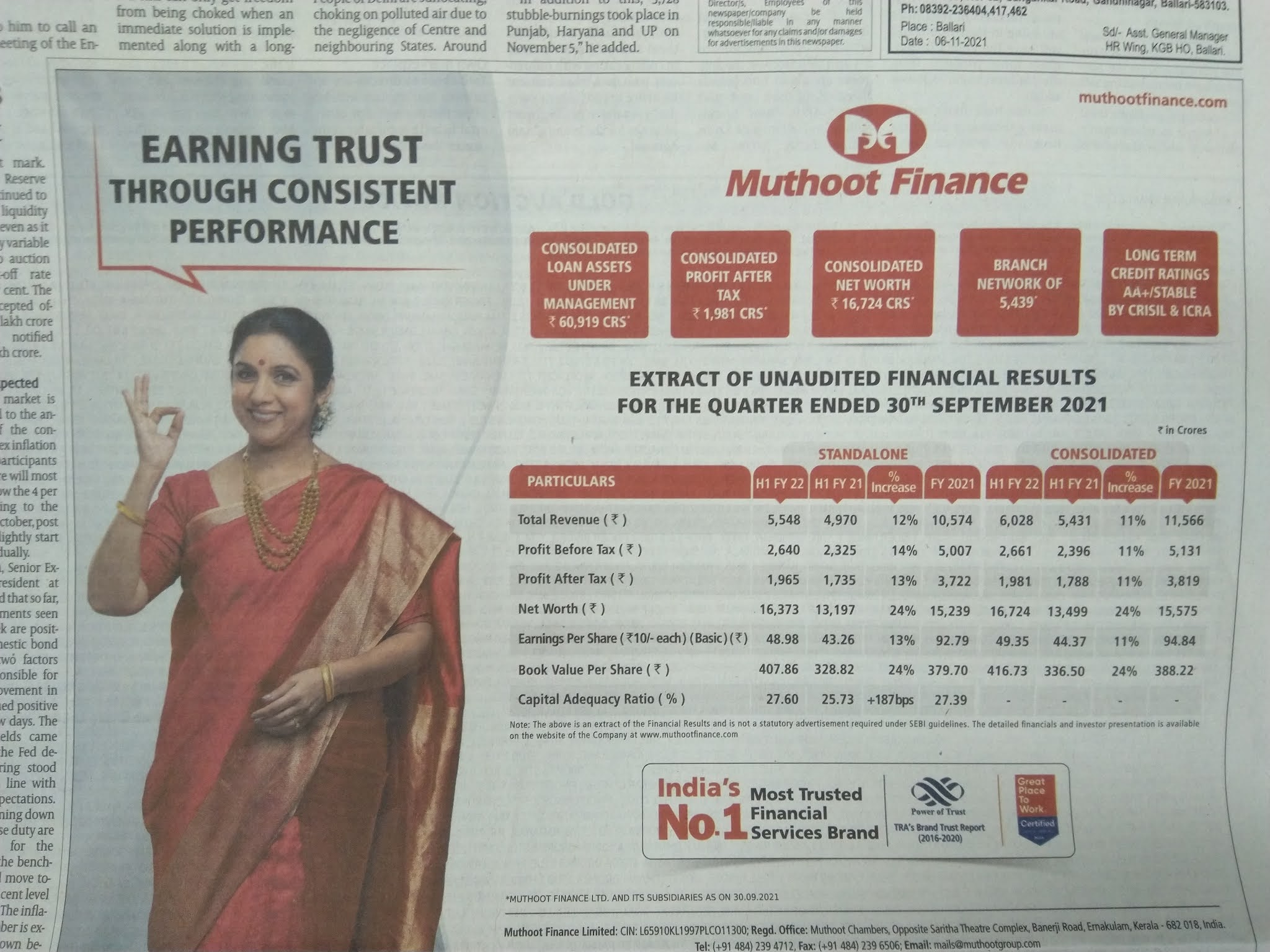
At a nearby Reading Room, I browse through the Business Standard and stop at a page that should not merit a second glance.  The next page looks exactly the same.  Turn over.  The same.  And a half-page more.  On these three-and-a-half pages are thousands of account numbers in tiny print, so small that they seem like lines of badly sewn stitches.  
It is a gold auction notice.  

This we – you and I - know: there is an alternate universe where men and, more significantly, women pledge their gold for small loans to address a medical issue or perhaps admission fees for a child in a private school or, unhappily, the costs of adhering to social mores for an unaffordable wedding.  Often, one loan repays another, one crisis ends, another begins, but they soldier on, sometimes lurching and stumbling their way through the maze of crippling interest rates, processing charges, late fees that choke and unforgiving penalties. They never forget that the gold loan needs to be repaid, for gold is never sold, only pledged.  Gold – though I am no fan of it – is social acceptance, comfort, protection, insurance, even identity.  There is a hidden language in that metal in this alternate universe. 

In this auction notice, read the signs of a crisis in that universe. 

That universe isn’t far away: our domestic help’s family could be living there, as could a family in interior Karnataka struck by Covid or a welder in Pudukottai whose machine shop shut for good after two waves of perdition.  It is their gold that will be sold to feed the collection-and-recovery frenzy reported with diligence to anxious collection managers.  In the old days, these gold hand-loan sort of guys were called ‘blade companies’ in God’s own country, but one can buy respectability:  get the  Kaun Banega Crorepati mascot to endorse you (he was once bust too, but has misplaced the experience).  Or, better still, IPL.   

To take my mind of this, I pick the Business Line up.  Lost reprieve, for it comes right back, this time through an ad.  The same lender has, on this same day, yet in another newspaper, announced its financial results: record profits and collections are the highlights.  As I read this, I wonder if that distressed family in interior Karnataka made this financial performance happen.  I know the answer.
And that makes me angry, in a feeble, helpless way. 

But in the universe I inhabit, the stock markets are booming, Dhanteras rocked while the crackers wouldn’t cease and economic news is about the recovery that the experts did not expect.  The chimera is real here and only a party-pooper would think otherwise, for the collateral damage is below the bonnet.  Only the paint matters. 

Yes, those three-and-a-half pages of badly sewn stitches in the Business Standard tell a story.  We need to listen. 
And help in every way we can. 


Wednesday, January 16, 2013

Agadhalla


There are some days that make you think.

I am sitting at Agadhalla village, at the base of Gopalswamy betta, at the edge of Bandipur Tiger Reserve.  A couple of hundred metres away is the main road to the temple atop the hill, a temple that is as breath-taking to reach as it is to behold.  The winding road to the top has panoramic views of the valleys below and the hills beyond, and sighting the odd elephant herd is routine.  Vehicles – the best of them – wind their way up, for the diety at Gopalswamy betta is revered by many.

Agadhalla is a couple of hundred metres away from the main road, but in every other sense, it could be on another planet. 
Every household has a story of woe to tell; often, it is the untold story that is vivid, evident in the expression of its denizens, in the deprivation that surrounds them, in the unimaginative homes that have been constructed for them by an uncaring administration.  The hamlet has two tribes – the Soligas and the Jenu Kurubas – and the friction between them is evident.  As the men and women engage in high-volume banter, there is little joy that you might sense and lesser expectation.   Even as the entire village delves deeper into debt, alcohol is the staple diet of the men - and many women -  in the evenings (as we have learnt to expect).  The homes have nothing inside; a few clothes and utensils, the odd, broken trunk in the corner, all of which reveal an unwillingness to seek a better life.  For the hundredth time, I ask the question: why? 

And as we – a motley group of students and, well, older students (including me) -  install a few fuel-efficient stoves in some homes and then wind our way to the primary school to speak with Guruswamy, the assiduous teacher there, there are more stories that await.  Of a child abandoned, of single-parent homes, of an older child who threatened to emulate his father and kill himself if forced to go to middle school.  

The relationship the hamlet shares with the forest is beset with tension: the Forest Department asserts that there is illegal firewood harvesting and the odd poaching of wildlife and when a Forester was speaking to me, the denizens stayed away.  Far away.  This village, he grumbled, is spoilt and lazy and wants easy work and easy money.  The Government gives them cheap food - 28 kg of rice, 5 kg of wheat and a kilo of sugar for just Rs. 120 - so they don’t really need to work much and now, by giving them free fuel-efficient stoves, he implied, you are spoiling them even more.  They see the forest as an exploit-able resource, to be plundered, not protected, he asserted fiercely.  I had to admit that he had a point.  But then, everyone did, everyone had a point in this forgotten village, in this place no one would want to understand.

Agadhalla is, be assured, just another tribal village around a National Park (Bandipur has a hundred and twenty three of them).  Another tick on my growing list of the tribal villages that I have spent time in around forests, searching for meaningful solutions.  Another tick on the growing list of an ailing, empty micro-society that is unhappy.  Perhaps angry.

Sitting in the sun that day and watching two little children on a tricycle, the dried flem from their noses seeming like a scar above their lips, their brown hair indicating protein deficiency, all of us asked the questions that have taunted me this long: why?  Why are we different from them?  
Why has it turned out this way, when we all know that the tribals were the original sustained protectors of the forest?  Why do they see the Forest Department as their enemy, when at least half their annual earnings come (or could come) from labour work done with the Department?  Why are they, as one of my students asked, unwilling to improve themselves, to seek work, to aspire for a better life, to yearn for a better tomorrow? And, most importantly, how can we catalyse change?  Change that preserves what is left of their culture, yet provides them respect and purpose and elicits from them, in turn, respect for the forest. 

That day, I returned to the metropolis, just in time to be at a friend’s place for dinner.   He introduced me to a colleague of his saying that I was ‘a guy who has quit the rat race to trample around forests’.  The colleague, mulled wine in hand, looked askance and with a mock shiver of his hand asked me if I was ‘an activist’. 

I don’t mind saying that I felt like hitting him then.


Tuesday, January 1, 2013

Seenappa buys a cow


Seenappa is amongst the most unassuming farmers you would come across in Javalagiri.  A thin, wiry man with a toothy smile and the easy stride that farmers have, his commitment to hard work is special.  Which is why I seek his labour as often as I can, to do the odd digging, clearing and planting that farms are always crying out for.  If there is one part of him that is possibly less endowed than it should be, it is the part well enclosed by the skull.  To add to this woeful deficiency of grey matter, is an inability to take decisions when they should be taken – a factor that has ensured his wife’s dominance over significant aspects of his life.

In July, Seenappa had exchanged a word with me on his monsoon plan; he would spend about seven thousand rupees on growing ragi on his land – this was normal -  and another fifteen on a cow.

“My wife…” he explained.  When I struggled to find the connection between female bovine and the better half, he elaborated, “it’s her decision to buy the cow.  It is milking now and we reckon that the profit in the next few months should be substantial.”  I tended to agree as a milking cow is generally (save for the onset of a nasty illness) a safe bet.  Farmers in these parts buy cattle that are a genetic mix of Jersey and naati (local) for, while this reduces the yield of milk, the animal is hardier and easier to maintain. 

Seenappa made his investments and, over the months,  kept me abreast of the progress.  The cow was doing well.  The ragi – failure of the monsoon notwithstanding – was ok.

When I saw Seenappa a few days ago, he grinned at me as he always does and, honestly, he looked a bit different.  Just what was different about him, I could not fathom and, as he began to chat, I lost that thread of thought. 

“How are your investments, Seenappa? The ragi and the cow?”
“Good, Sir,” he replied. “ I should get about twenty thousand from the ragi and its stalk sale (cattle fodder). But, Sir, this is only because all the effort is by me and my wife, with very little outside labour.” (which, incidentally is about two hundred rupees a day).  

So, a profit of about thirteen thousand rupees in all, for four months of regular effort, night vigils to prevent wild boar incursions and the risk of crop failure.

“And how is the cow coming along?”
He hesitated and then grinned (again, I noticed something different, but couldn’t place my finger on it).  “Sir, I don’t know about the cow. We spent about four thousand on the cow this season, and the milk has yielded about ten thousand.”

“That’s excellent!”  The analyst is me is calculating a return on investment (quarter-on-quarter) of forty percent.

“Yes, Sir.  A week ago, I was placing some feed near the cow when she, poor thing, shook her head to get rid of some flies.  Her horn took my tooth right out.” He lifted his gum to show me the now-dried stain; so this was what was different about him!

“Good Lord! But I suppose you are lucky it didn’t get further up……” Its easy to look at the brighter side, when it’s not you who has lost a tooth.

“Yes, Sir,” he readily agreed.”I went to the Government hospital and got it treated for free. But if I am to get a tooth to replace this, it should cost me a little more than all the profit that I have made on the cow this far.”

“That is dreadful!” I exclaimed. “So, what have you decided?”

“Well, we need the cow more than the tooth.” He answered philosophically as he walked briskly away, in that characteristic easy way of his, to dig another pit.