Saturday, July 17, 2021

B for Absent-Minded

 Sandy B was the most – THE most – absent-minded person in our batch at IIMB.  Today, he is a prof in the US, which is appropriate placement for that absent-mindedness (as distinguished from his brain, which is formidable and has awed me no end).

Sandy B was my neighbour in the hostel, so I saw a lot of him.  I mean this literally because he often forgot to wear all his clothes or remembered to wear but forgot where those clothes were.  He would emerge from his room that had last seen any attempt at organisation around the time of the Chola kingdom with a loopy apologetic smile which - given the sore sight he presented – was necessary to mollify viewers, even those in our close circle who were inured to the spectacle.  He could never remember if he had had a bath and would then employ some utterly questionable methods (on which I shall not dwell) to determine the answer.

He had heard of exercise as being a human activity, but never thought of it as something that was applicable to him (from more recent photos of his, it appears that there has been an education).  In stout (and, how did this pun get here?) defence of the generous adipose around his tummy, he would quote Obelix, “My chest has slipped a bit…” with an endearing grin, which then got two other worthies, Santy and Sampy (no, they weren’t twins), to jiggle his belly a bit. 

The other part of him that interested the citizens of Bangalore were his hands. If you asked him for directions to somewhere, his hands would come to life and twist and turn in impossible ways, until you recognised that you were dealing with a Superior Talent and chose to figure out the route yourself (stuff like Google Maps has made our life immensely boring and I am all for banning it). 
ps: his dad forbade him from using his car, for which, of course, the larger populace of our city is immensely grateful. 

Sometimes he would sing (in a fetching voice with the superior talent that Bongs – including those who walk around modestly clothed – possess), but while singing, the arms would move and his fingers would keep the voice company, twisting and turning in scale progression, his head nodding away, the eyes with a far away look. This was because he thought he was on stage. On other occasions, he would speak to himself with a puzzled expression, saying, “Now, how did that happen?”, with his forefinger on his chin and a look of surprise, while surveying the fifteen others who were clutching their bellies (not his, for a change) and grinning away.    

Of course, if there were any assignments to be done, Sandy B had forgotten all about them immediately after.  To prevent that, he decided to make it a point to write them down diligently.  He would then misplace that book.  But, in his support, he never forgot to ask us to inform him of where he had misplaced the book that would remind him of the assignment.  So there. 

But the best stories were (and, probably, still are) of his travels, for he seems to reserve that raw talent for the larger world.  We learned from his engineering batchmates about his train journeys to and from Bangalore and the general impression was that miracles do happen, else he should have been an illegal immigrant in Colombia.  Once, we were told, he exchanged his second-class berth for an army man’s first-class one, because the fauji wanted to be with friends.  Later that night, of course, he got himself into hot water when the ticket examiner came around: absent-mindedly, he fished out his ID card and then tried, in vain, to convince a stern, disapproving, unbelieving ticket examiner that he had done no impersonation. The experience, in the words of our stellar representative of the human race was, ‘harrowing’. 

The next time we meet, if he remembers the place and the time and fetches up, I shall have to put my forefinger on the chin and say, “Now, how did that happen?”


Friday, July 2, 2021

A Soldier Never Dies

A soldier never dies, they say, he just fades away. 

As I walked past the empty plot of land that once had an old house on it, I thought of a remarkable fauji who had lived for many years there.  It had been a tiny little non-descript home, painted an unappetizing shade of green and its demolition left the city no poorer.  
Yet the elderly couple who had once lived there were a fascinating study.

About a couple of years after we moved to Bangalore, my father was delighted to meet his classmate from college, a now-retired Major from the Military Police, VR Menon. They lost little time in renewing their friendship and found an interest that brought them together for a couple of hours each evening, a passion for brisk, long walks, often followed by a small drink at either person’s home. 

VR was a fauji to his last atom and about as different as could be from Dad. He had a luxurious moustache, every strand of hair in immaculate position with Brylcreem (alas, no longer a staple in the contemporary bath), while Dad abhorred moustaches and never had one. If Dad was a fun-loving, jovial person, VR was overtly quite the contrary, his demeanour - aided by Brylcreem moustache - forbidding and as stiff as his fauji backbone.  When amused, VR’s moustache would twitch a bit and the eyes would narrow for but the briefest moment, which provided much relief to those around. And, if my father was easy going, VR had a temper that was legendary. 

Indeed, it was his fury, sharpened by a keen sense of right and wrong, that had plagued him for much of his life. A story was often heard in the Malu circles in Bangalore of an incident in the 1960s in the Kashmir Valley, when VR came out of his house in the Army base on hearing his elder son yell for help, followed by a dog’s snarl. The Alsatian belonging to the Brigadier of the base, no less, had bitten his son. 

Now, the rule in the Army is simple: a Brigadier’s dog is to be treated broadly on par with the Brigadier. VR took his son in, brought his gun out, and shot the dog. The Bangalore Malu circs were unanimous in their view that this incident, possibly aided by other bouts of fury, decreed his retirement at the level of a Major. VR seemed to agree as well. He once remarked, with candour, to my Dad that a donkey that joins the army cannot but retire as a Major. I do not quite remember his tone of voice when he said this. Was it regret? Pathos? Humour? Yet, notably, he never quite saw the need to change. In conversations over an evening drink, he would have the most simple solutions for the World’s ailments, each such solution aided by the liberal use of a Point 22 automatic that he believed was useless when kept in the armoury.  As a discussion on corruption, for instance, warmed up, his moustache would move an inch upwards, the eyes would narrow (that’s the smile quotient) and he would say: ‘shoot the bloody fellow, that’s the answer,’ and the ladies in the audience would either be in splits or full of ‘Aiaiyoo’s or ‘Guruvayurappa’ or some such invective. 

VR’s family was a study in contrast. Ammu aunty, his demure wife, was small and rotund in appearance, with a sweet high-pitched voice and open smile. She, so the Malu circs opined, channelled her husband’s behaviour with skilled gentility that no Point 22 could answer. It was impossible to not like her and VR was devoted to her, recognising her ability to moderate his own impulsive nature. 

VR and my father became so close in the three or four years that they walked together that, when my father died in 1984, he went into a depression, refusing to talk to anyone for days. He must have picked himself up as only a fauji can, for, some time later, I began to see him on his evening walk, now alone. The pace of the walk was brisk, the back erect and, when he saw me, the conversation would be formal and brief, yet those expressive eyes under the bushy eyebrows would mist up for a brief moment.  Or did I imagine this? But I knew that he missed Dad, as much as I did.  Theirs had been, like the odd friendship we experience in our lifetimes, a meeting of souls.  

A couple of years later, the family shifted from that home in Indiranagar – the one I had walked past – to a small apartment off Richmond Road. While Ammu aunty and mum stayed in touch, for VR the link had been broken. 
Some years later, his wife passed away. 

I have yet to meet someone who has been as devastated by a spouse’s death as VR was. She was getting on in years and wasn’t in good health, yet he was inconsolable. Many months after her demise, I knocked on his door and did not quite recognise the old, gently bent man who opened it for me, the eyes half-lidded, the expression one of disinterest. He had stopped his walks and, instead, moped about the home in the evening of his life, in search of meaning, avoiding the company of those who knew him well. It was hard to visit him again, for there was nothing to talk about, no connection to bond.  We were a chasm apart.  
So, I did not visit him again.

I once read an article by a surgeon where he describes a surgery as a partnership between the surgeon and the patient. A surgeon can only, he had said, fix an engine; the patient must provide the spark for it to run. VR had lost the spark and passed away in the early 1990s. 
The fauji had faded into the sunset.

Thursday, June 10, 2021

The SSence of Maths

If you get off your vehicle on Ulsoor main road – a busy arterial way where pedestrians are uncooked meat, buses are uncrowned emperors and vendors of flowers, footballs and filters the unnamed nobility – and turn into a sidelane into which the market overflows, you will see a higher level of chaos, if indeed that is possible. There are carts, two wheelers, cycles and shoppers, a noisy mass, an agglomeration of diligent humanity that has little room to stop, think or look around.  The movement, the smells, the colours and the diversity represent old Bangalore, once detested, now captured with evocative eloquence in an occasional coffee table book. 

Continue to walk a bit down this lane and do the unthinkable: stop for a moment (after looking around you to avoid moving objects, such as shopping bags).  Look to your left and you see the tiniest of houses with a narrow staircase in front leading to the little room upstairs.  If this was the 1970s or the 80s and you were a student, you would turn in, take the stairs that led to the room and then join the melee of young students standing in the short, narrow corridor, speaking in whispers. 
For, in the room, was the finest Maths teacher that I (and a few thousand other students) have ever known.   

SS – which is how S Srinivasan was called by everyone – wasn’t just a teacher; he was an institution into himself, far above the prosaic identity of St Josephs College of Arts and Science where he taught.  SS asked for nothing – he charged no tuition fees, was perfectly fine with your neglect of homework or indeed your absence from class (it did not even register in his mind) and was happy to admit a late entrant.   
What he did get in ample measure was respect and awe, and a reputation that preceded him by miles.  At St Josephs, he was part of a vanishing breed of old-school teachers, each an expert at his subject with a devoted fan following and larger than life, yet humble personality. Yet, it was the tuitions that made him the rockstar
   
SS was devoted to the science of mathematics; indeed, the word ‘devotion’ hardly does justice to his approach which was absolute, whole-hearted, involved, considerate commitment for its own sake and nothing else.  And if there ever was a human who combined such fervour with genius, this man was that human.    

The sweetest words to his ears were when a pupil-to-be said, “Sir, I want to study maths.”
He would then reply, “Why-uh? Are you writing an entrance exam-uh?”
“No Sir.  Actually, I only want to study maths to learn more” (though most who said it didn’t mean it; they had been tutored by the more experienced).
A beam would then appear on his face. 
“Ok-uh.  Come from tomorrow.  You can join the 4 pm batch.”
And that was that.   

SS tutored students every single morning and evening, including his day off at College - which was Sunday.  The door upstairs would open early in the morning and the queue of students – those in their under-grad or studying for CA, ICWA, engineering, post-grad or anything else – would have formed by then.  SS – a small, fair, rotund man with a triple chin, white hair and a stubble, wearing a veshti and shirt – would enter that little room after a morning coffee and take his seat behind an old table, as the students shuffled in and occupied every inch of the room, in two or three rows. He would then take the notebook of the nearest student, pull out a pen that was a fixture in his shirt pocket, spend a few seconds flipping the pages to get an idea of what had been covered and then continue.  He taught so many groups that it was a miracle he could pick the threads up this quickly.

After years of experience, he needed no textbook to look up problems from, for even these were embedded in that razor-sharp brain.  If a student fished out a textbook and asked deferentially, “Sir, could you please look at this problem?”, he would take the book, narrow his eyes, examine the problem in question and then begin writing out the solution, speaking more to himself that to the student. 
“Yes-suh,” he would intone, “this-uh is a simultaneous equation-uh.  Now, let me see……” and, in a low-toned monologue that was accompanied by lucid steps, the problem would be laid to rest.  

The retinue of students around the table would write furiously, trying to keep up with him, or watch with fascination.  A few who had given up hope would stare and wonder if their parents could be persuaded to let them study fine art or music – with these students he’d spend extra time, most often to no avail, for the battle had been lost in their minds years earlier, under teachers who were trained to damage learning, not foster it.  SS saw his task as getting the subject to be loved, just as he did.  And he loved solving problems, a logicist par excellence.

There is no doubt - not the slightest - that SS was a genius.  It may have been the curd rice that he had for lunch or the genes or perhaps both.  As an aside, while the second factor – genes – has been much researched,  the the impact of the first – curd rice – on intelligence must be the final frontier of brain research, as the empirical evidence is compelling.   

At about 8 am, he would wind up, go downstairs for breakfast, change from the veshti to a pair of trousers and, in a slow, deliberate way, pedal his way on an old cycle to college that was twenty minutes away,  steel tiffin carrier with curd rice securely held in the carrier at the back.  He’d return in time for an afternoon coffee and then get back into the room upstairs again, tutoring batch after batch till it was time for dinner. 

During his sessions, everyone had a purpose and there was little room – forgive the pun - for banter, humour or, indeed, harangue and his eyes rarely left the notebook in front of him.  When the results of various exams were announced, there would be sweets all around and a student would deferentially place an envelope with some cash in front of SS, which would then be gracefully accepted with a brief ‘Thank you’.    

There was just the one thing he was chronically allergic to: the IIT entrance exam.  If a student fetched up and said that he wanted maths coaching for the IIT entrance, the fair face with the triple chin would morph into a frown, the eyes would narrow and his plump body would draw itself to its full height (about five feet five inches at best).  An icy voice would then reply, “I do not prepare students for IIT-uh.”  And that was that.

So, obviously, those who did prepare for the IIT entrance were creative.  In those days, one prepared for IIT in one’s 11th standard, not when one fell off the pram as happens now, so some quick thinking was easily done with inputs from other students and creative answers such as, “I want to learn maths because it’s my special subject” emerged.  

At college, I began studying for my Cost Accounting examination.  This meant that, for two memorable years, I was in that little room three hours a week, as notebook after notebook filled up with his prose.  And f
or thirty five years, I have carried these precious notebooks around in the hope that I will go back to Permutations and Combinations on one dark, monsoon day.  And in the hope that, as I read those pages with puzzlement (for they seem to be Greek and Swahili combined),  the odd smell of that room will come back along with images of the students hunched over their notebooks in front of that small man, who lived for his craft, expecting nothing, yet generous with the astonishing knowledge that was stored in those special grey cells.  

Perhaps then, caught up in that imagery, I will look at my son and say, “Why-uh are you not doing maths now?”


Monday, May 31, 2021

The Grass Is Greener On The Other End Of The Other Side

One of the notable aspects of my life occurs when people who know I have a Kerala origin and genes to match learn that I am a vegetarian.

For almost all non-Kerala folks, these two are entirely incongruous and cannot happen simultaneously at least in one individual (in the same lifetime).
The tendency is then to do the following 4 things, in sequential order:
a) I am sized up, examined with raised eyebrows and assigned a sub-species name such as Homo Sapiens Malu-bogus. They all want to now see if those veggies have done something to the way I pronounce coconut or quickly or corner or braandy. None of them can pronounce Malampuzha or Thondimuthalum Driksakshiyum to save their life, so I see this as downright seditious.
b) They ask me when I became veggie. I once thought of employing a call centre to answer this question, but that was before I read Snappy Answers to Stupid Questions, which is the only guide you need to deep existential issues.   
Question: When did you become veggie?
Inspirational answer (since you have now read above book): “I became veggie the year the ring worm shifted residence from pig faeces to human intestines.” Keep serious, introspective expression.
This answer is greeted by a surprised silence (though a couple of folks will come close to throwing up, so do not attempt this at home). Some, who have not experienced a real call centre and hence are unspoilt by civilisation, then ask, “Which year was that?’ to which, of course, you must reply with, “The year I became veggie.” And, then promise yourself a Corner House Ice cream.
c) They – almost always - earnestly plod me on to try non-veggie stuff at least once. The tactic here (forgive the advice mode again) is to fully agree that, yes, we need to try it and that Life is all about excitement, adventure and ringworm side effects, but could I please use the washroom now? Once you enter the washroom, do watch Sholay on your mobile Netflix account from beginning to end, missing no detail however slight and rewinding the songs. Hopefully, when you are back, the topic would be Should We Call the Doctor and the division of the bill.
d) And finally, I am asked if there is any real Malu food that is veggie, while they order appam-and-stew and steamed banana, all of which I suppose they think is grown inside a goat. The ones who ask this question with a smirk deserve solitary confinement on Easter Island. Others really want to know, for Indians have an urge (it is scientifically proven to border on mania) to accumulate information of absolutely no value to themselves. These were moments when I would forget the names of everything that I have eaten all my life and stutter for credibility but I now ask the person to ask Ramu kaka or Google chacha, for the subject is vast and nuanced (a word everybody uses these days, when they don’t say like or bro or dude or herd immunity).
The key, I have learnt - after considered thought - is to put on a certain condescending authority when you answer: that disdain is the difference between your success and mutton keema curry.

Monday, February 15, 2021

Those Little White Pills

 February 15th 2021

Yesterday, five of us took a walk to the top of a hill in the memory of a fellow-walker.  Doc was a thinker, part-philosopher part-iconoclast, consummate team mate. 
Above all, we walked together.  
Over the last twenty years, when we walked the hills – the ancient rock formations around Bangalore, above the stratus clouds in Coorg and across the narrow Pass of the Gaddis at Hampta in Himachal - he was a quiet, reflective, inspiring companion, his lithe frame skipping over the rocks, his breathing even, the eyes curious to explore.  When we shivered and cursed the biting, unrelenting freeze, he would swap short notes with our trek guide on local medicines – the cold was in the mind and if you convinced yourself that it wasn’t there, well, it wasn’t.
 
Every plant had a story to tell him, for wasn’t his homeopathy based on the science of the botanical? His was a life inspired by these plants, a life that was happy to seek answers to quotidian questions of pagan mystique, an uncomplicated, disciplined life of meditation, with gentle humour and an inner smile.  If he felt unwell, we would never know of it, for much of that conversation was with himself.  If he felt angry, he too would never know of it, for it was an alien emotion.  When the walk was done and we were back in our homes, he’d disappear till the next walk happened.  Attachment was like anger, an alien emotion.
He was built to be a walker.
 
On one walk, he reflected that he was becoming aware of his own mortality, which despite having had the occasional deeper conversation surprised me.  That is what walking does to you sometimes, and that reflection – when you see a giant of a hill by your side, the result of four billion years of utterly miraculous evolution – is evocative, humbling, meditative.  
Doc was a meditative walker.  The journey mattered.  Time did not.

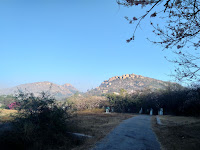
We laboured up the beautiful Kaiwara Hill last morning – a
drying forest of waiting tinder - and exchanged our Doc stories and the odd one he had left behind in that noiseless, unassuming way of his.  We laughed about his little white pills, thinking of the times when he had defended his science with a knowing smile and allowed us our earthly mirth.  Had he been on the walk, that smile would have been teased us back in turn.  


We trundled our way up, with even DV – whose legs had last been pushed to perform three years ago – making the grunt to the top, and laughed and joked for much of the time, for Doc would have wanted it that way. 
 
“Don’t pay attention to me,” he would have said, in that dismissive way of his, “just move on.”
Doc was a walker, you see.
 

And as we dropped our bags at the top of the hill, and took the odd photo – sunlight reflecting off grey hair, stomachs in, shoulders up – he must have been smiling down on us behind that neatly trimmed beard in that bright way of his.  For nothing better could be expected from this motley bunch of stragglers, all of whom would remember him as The One Who Walked Alongside In Meditation.


The panorama from Kaiwara betta
Circa: February 14th, 2021

Sunday, October 11, 2020

I Live On The Road To Destiny

I live on the road to destiny
On an endless journey, surviving on memories
A wish of joy for you, my fellow travellers
For I am driven by wanderlust
On this journey to an unknown destination.

There are those who, in their search and wander,
Were burnt by the mid-day sun.
Scorched without, scorched within…..
To shadows, each with a memory of an earlier self,
And, as these shadows cast on an earth parched,
Some corner of that blue cloudless burning sky
Folded up and fell into light, troubled slumber.
As I traverse this interminable road
The mind lives in these memories of shadow and light
Streaming vignettes of solitary recollection

While my feet are in flight,
And the earth flows like a river beneath
I look over my shoulder and scan the horizon.
For a destination that is somewhere behind
Journey’s End, where wanderlust would cease.
Yet, there is nothing.
So I traverse the road night and day
A journey unending beyond inclination or will.
Stay well, fellow travellers - my wish to you on a wing
I am compelled to move, it is the only way I know.

The nest is empty, crumbly and decaying,
Its brown blades of grass now tossed by the stormy wind
On an endless turbulent flight to nowhere.
And as I reach villages that offer respite and rest
The road seems to take a turn
Away and back, to those reflections on the past
Blown by the breeze like those blades of grass.
Those memories are my home, carried within
And when I stop anywhere, that becomes my abode,
My nest and cocoon for the night ahead.
It is a comforting journey, the one on this road.
The only way I know


Saturday, May 9, 2020

The Laugh That Won You Over


My first experience of Sivan uncle was his laughter.  One day in the mid-80s, I had just entered Vrindavanam and heard a booming, whole-hearted laugh, followed by another.  This was most unusual, for the older generation there believed that laughter was something that possibly earned you a bacterial form in your next life.  But entering this room, I saw this unusual man, with thick, white hair combed neatly back and a heavy pair of spectacles through which the eyes twinkled, seated cross legged on a bed, with a ready audience. 
He was immediately likeable.

I did not expect to meet such a lively person; just about a year earlier, he had lost much of his life’s work in Sri Lanka: livelihood, reputation as a lawyer, home and God-knows-what-else, leaving the country when the ethnic violence reached a point of no return.  The  years had been harrowing and stressful, yet you would never have guessed it;  wait for a while and you would hear his laughter, a trademark that defined him along with those twinkling eyes.   So, when he stayed with us in Bangalore next, I wanted to know him more.  I showed him books by my favourite cartoonist, RK Laxman, and, of course, the laughter touched a new crescendo – he would read a cartoon and find every nuance possible, each funnier than the earlier one.  
Some months later, he told me that he had actually met Laxman, when in Bombay and had his autograph. 
“But, how?” I wondered, for I had read that Laxman was an irascible character, prone to rudeness.  He apparently liked to work in his room at the Times all alone and was entirely intolerant of any interruption. 
“I just went into the Times building, asked around and went up and met him.” Sivan uncle said, as if the answer was utterly rudimentary.   But, you see, for him it was.  For Sivan uncle was a charmer, a man who could melt a curmudgeon, and I could see just how Laxman might have found it impossible to be anything other than civil in his presence.  
Yet, it was as I got to know him better that the other facets of his personality came alive: his eclectic taste in books and extraordinary humility (by the way, have you noticed that people who laugh a lot and from their heart are generally humble; it’s funny, there is a clear positive correlation).

Two books in my college years particularly influenced me: Small is Beautiful by EF Schumacher and a biography of Mahatma Gandhi by Louis Fischer.  When Uncle and I discussed them – and, by the way, he was the only one I could discuss them with – I began to see more to him than a funny, lively human being.  Deep within, there was philosophy, extraordinary (for the times) liberal thought -hence the connection with the Mahatma - and a sense of purpose.

Much of our conversations centred around development, though there was little I could contribute to the conversation that was original (a generation later in 2006, I would have similar conversations with Purnima). These were rich learning, so rich that I even asked Uncle for help with admission to a Masters program in MCC, Madras, so that I could catch up with him more often; his soft word actually had the admission ready and I attended the interview as well, but didn’t take up the course (that’s a story for another day).

While in Madras, he had fought for the Tamil cause in Sri Lanka, about which I knew little.  But it was after moving to Coimbatore that he joined an issue that I could entirely relate to:
South India Viscose made staple fibre used in clothing.  It was owned by one of the richest men in India, Shapoorji Pallonji Mistry (today, better identified as the father of Cyrus) and operated an old plant with poor effluent treatment facilities, resulting in the horrific pollution of the Bhavani river, the waterline to Coimbatore.  There were activists fighting the factory and he joined them: his role was to help with matters of law and, critically, to inspire others who were in the boat.  We spoke about it often and I was thrilled to see an activist amongst the pantheon of conformists in the parent generation. 
One day in 1997, in his own lifetime and to his delight, the factory was shut (it subsequently put effluent treatment systems in place and reopened, but I do not know the current operating status; perhaps, it is better that way!).

But of course, Sivan Uncle took on a number of others too, including a lady collector in the Nilgiris who was known to be both corrupt and ruthless (much like her political mentor); she got him arrested and those months in jail were rough and hard.  Now here is the crux: over the years – even in January this year – I have felt nervousness and agitation, and fear, at sporadic attempts at activism.  Every such time, I have asked myself, Just how did Sivan uncle manage his emotions?   I got a clue when I met him once he had got out of jail, as a result of the direct intervention of Amnesty International.  “She is a dangerous woman,” he told me, the lips set in a grim line, but the eyes?  The eyes were twinkling.  Because Sivan uncle loved the battle; it got him going in a style that was uniquely his. 
With that battle, he became an icon for me.  Sivan uncle, it seemed to me with my early-twenties idealism, could do anything. 

When, in 1993, he came to Bangalore, Mum told him that Aruna and I were engaged.  The broad open smile on hearing the news, the warm handshake, the ‘aaahhh’ of delight, the hug that followed, these are unforgettable memories of affection and warmth.  And what I love about memories is that they are within and remain alive even when the person has gone away, amidst the deepest sorrow of absence.  He immediately wanted to meet her, so he hopped onto the back seat of my bike (CAO 7474, now a family heirloom) and we rode up to the Tata IBM office on Airport Road.  On that busy arterial road, as the three of us chatted, he had won her over in about a minute and a half with his laughter and self-deprecating humour. 
For, he was, as you now know for sure, a Real Charmer.

And he was the only one who could persuade me to meet an Aunt in Palakkad, who wasn’t exactly known for her likeability and with whom I had, shall we say, a most frosty relationship.  The meeting did not go according to script (well, it was his script, not hers!), and he was most apologetic later.  But nobody else could have made me do that in a hundred years, and make me feel good about it later.  Charmer again!

And then there other memories too: of an afternoon in Kotagiri where Aruna and I stood at the back of a room listening to Uncle speak in Tamil.  I did not understand a word, of course, but the tone was passionate, committed, thoughtful, positive.  The words, Aruna later said, matched in style and flow and the command over the language was masterly.  That was the thing about Sivan uncle: after meeting him, you discussed him! 

And I think of a Sunday in Manas and of a discussion - over a drink - on philosophy and yoga between Nimmu and Uncle.  I think Uncle was posed a challenge and on impulse, he stood on his head, doing the shirsha-asana (and talking and laughing away).  That, I think, is the finest way to remember him: headstand, post-beer, philosophy turned upside down and laughing.

How could a person be just….so complete?